Key Takeaways:
Which type of dining table is best for your home and lifestyle?
- The answer to which type of dining table is best depends on your space, daily usage, and how many people you need to seat comfortably.
- Shape plays a key role, with round tables suited for compact layouts, while rectangular tables maximise seating in longer spaces.
- Proper sizing, including clearance and table height, ensures comfortable movement and supports everyday use, especially in open-plan homes.
- Material choice affects both durability and maintenance, with options like solid wood, marble, glass, and veneer offering different trade-offs.
- A well-chosen table should align with your interior style, support multi-use needs, and remain practical over time rather than focusing only on appearance.
Introduction
Choosing which type of dining table is best for your home goes beyond visual appeal. It shapes how you gather, dine, and connect in your everyday routine. For homeowners in Singapore, whether furnishing a compact BTO flat, a resale unit, or a landed property, the dining table often serves multiple purposes beyond meals, from casual work setups to shared family activities.
With a wide range of shapes, materials, and configurations available, making the right choice requires a thoughtful balance of proportion, durability, and lifestyle fit. Understanding these factors allows you to select a table that integrates naturally into your home while supporting how you live.
Which Type of Dining Table Is Best for Different Home Layouts?
Shape Matters: Matching Function to Space
The shape of your table plays a defining role in both usability and spatial flow. For compact HDB or condominium layouts, round dining tables often create a more fluid movement around the space while encouraging interaction. Their softer edges also reduce the risk of accidental knocks, which can be helpful in tighter layouts or households with children.
Rectangular tables remain a practical choice for longer layouts, offering structured seating and the ability to accommodate more people comfortably. Oval designs introduce a middle ground, softening the visual presence of a longer table while maintaining seating efficiency. When considering which type of dining table is best, shape should always respond to how your space is used daily rather than purely aesthetic preference.
Beyond form, it is useful to align shape with realistic seating expectations. While a table may technically accommodate more seats, everyday comfort often requires allowing slightly more personal space per diner rather than maximising capacity. This ensures usability without overcrowding, especially for longer meals or multi-use scenarios.
Size, Proportion, and Movement Flow
Selecting the correct dimensions ensures the dining area feels balanced rather than cramped. A practical reference is to allow approximately 90 cm of clearance around the table, ensuring comfortable movement even in tighter layouts. Each diner generally requires about 60 cm of width for comfortable seating.
In open-plan homes, it is equally important to consider how the table interacts with surrounding movement paths, particularly between the kitchen and living area. A well-placed dining table should support natural circulation rather than interrupt it.
Dining tables are typically designed at a height of around 75 cm, which supports comfortable seating with most standard chairs. Ensuring alignment between table height and chair seat height is essential for long-term comfort, especially during extended meals or when the table is used for work or study.
Extendable tables provide flexibility, but fixed tables may be more suitable where daily seating needs remain consistent. Fixed tables often offer a cleaner visual profile and structural simplicity, while extendable options prioritise adaptability for occasional hosting.
For homeowners in Singapore exploring options for a dining table, these considerations become particularly relevant in BTO layouts or open-plan configurations where dining, living, and work zones often overlap.
What Materials Work Best for Long-Term Use?
Material Choices: Balancing Beauty and Durability
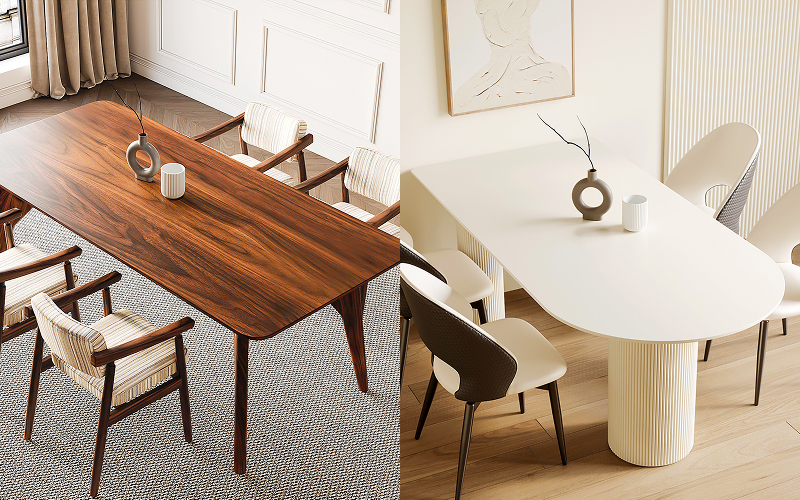
Material selection influences not only how the table looks, but also how it performs over time. Solid wood options such as teak or oak are often appreciated for their strength and resilience, particularly in Singapore’s humid environment. They develop character over time while maintaining structural integrity.
Marble surfaces introduce a refined visual weight, creating a focal point within the dining space. Glass tops offer a lighter, more open feel, which can visually expand smaller areas. Veneer finishes provide a clean and consistent appearance while maintaining practicality for everyday use.
When comparing dining table materials, it becomes clear that each option involves trade-offs. Solid wood, for example, offers strong durability but may require occasional care to maintain its finish. Marble provides visual impact but can be more sensitive to staining. Glass is easy to maintain yet may show marks more visibly. These differences should be evaluated not only in terms of appearance, but also how they support your daily routine.
Everyday Use, Maintenance, and Long-Term Value
Beyond material and shape, how the table is used daily should guide the final decision. In many Singapore homes, dining tables double as workspaces, study areas, or shared activity zones. This makes durability, surface maintenance, and comfort even more important.
Households that dine together regularly may prioritise ease of cleaning and resistance to wear, while those who host occasionally may focus on flexibility and presentation. It is also important to ensure that the chosen piece is not just an aesthetic statement, but a highly functional fixture that supports your daily rhythm, as some materials may look refined but require more upkeep over time.
Taking a long-term view helps avoid frequent replacement. Investing in a well-constructed table that supports multiple uses can offer better value over time. This approach is especially relevant when evaluating which type of dining table is best, as it aligns design decisions with real-life usage.
How Should Your Dining Table Fit Your Interior Style?
Style Harmony and Visual Balance
A dining table should feel integrated rather than standalone. In modern Singapore homes, where design themes are often cohesive, the table needs to align with the broader interior direction.
Minimalist spaces benefit from clean lines and understated finishes, while Scandinavian-inspired interiors often favour lighter wood tones and simple silhouettes. For more refined settings, subtle detailing or richer materials can elevate the overall composition.
It is also worth considering how the table affects the perception of space. Lighter materials or slimmer profiles can make a room feel more open, while heavier forms may create a stronger visual anchor. Choosing a design that balances presence and openness supports a more comfortable living environment. When the dining table aligns with your overall interior style, the space feels cohesive and well-considered without relying on short-term design trends.
Base Design, Thickness, and Seating Cohesion
An often-overlooked factor is the structure beneath the tabletop. Pedestal bases can offer greater flexibility for seating, while four-leg designs provide stability but may limit chair placement.
Tabletop thickness also contributes to visual weight. Thicker tops may feel more substantial, while slimmer profiles help smaller spaces appear less crowded. These design choices influence both aesthetics and usability.
This becomes particularly important when planning how to buy dining chairs. Beyond fit and height, chairs should complement the table in material, colour, and proportion to create a cohesive dining setting rather than a mismatched arrangement.
When Should You Consider a Custom Dining Table?
Standard dimensions may not always align with the unique layout of a home. In such cases, customisation provides a more tailored solution. A custom dining table allows you to define the exact proportions, materials, and finishes required to suit your space.
This is especially relevant in Singapore homes with narrow dining zones, irregular layouts, or built-in features. Practical considerations such as lift access, stairwell dimensions, and delivery constraints should also be taken into account when selecting table sizes.
If standard options compromise movement flow, seating comfort, or visual balance, customisation becomes a more suitable approach. For homeowners in Singapore navigating these constraints, exploring custom furniture options provides greater control while supporting space-saving dining solutions that align with the home’s layout.
Conclusion
Understanding which type of dining table is best comes down to aligning space, usage, material, and design into a cohesive decision. A simple way to approach this is to assess your available space, determine how many people you seat daily, consider how the table will be used beyond dining, and then refine your choice based on material and style.
There is no single perfect dining table, only one that fits your home and lifestyle most appropriately. Avoid prioritising maximum seating over comfort or design over usability, as these often affect long-term satisfaction more than initial appearance.
Browse WTP Furniture’s dining table collections to find designs that complement your space and everyday living.