Reupholstering a sofa is not a single job, it is a sequence of roughly seven to nine distinct stages, each drawing on a different skill: joinery for the frame, hand-tying for the springs, tailoring for the fabric, and finishing work to make the piece look factory-new. But knowing the process is only half of what most people actually need. The bigger questions are usually whether a particular sofa is even worth reupholstering, whether to reupholster or replace it, and which fabric will still look good in five years.
This guide covers all of it: the full process step by step, how to judge whether your sofa is a good candidate, how reupholstery compares to buying new, how to choose the right fabric, and how to care for the piece afterward so the work lasts.
Key Takeaways
- Reupholstery involves removing the existing fabric from a sofa and replacing it with a new fabric.
- Additional services such as structural repairs, repadding and new cushions can be arranged separately depending on the condition and requirements of the sofa.
- A standard three-seater sofa typically requires around 11 to 16 metres of fabric, although the exact amount depends on the sofa’s size, design and fabric pattern.
- Reupholstery can be a practical option for sofas that are suitable for recovering, particularly when the existing piece has a design or structure that the homeowner would like to retain.
- The overall cost can vary depending on the fabric selected, the size and design of the sofa, and whether any additional services such as structural repairs, repadding or new cushions are required.
Reupholstery, Recovering and Slipcovers: What the Terms Actually Mean
The terms “reupholstery” and “recovering” are often used interchangeably in Singapore, so it is helpful to understand what the service involves when comparing quotations.
Reupholstery or recovering generally involves removing the existing fabric from a sofa and replacing it with a new fabric. The service focuses on refreshing the outer fabric while retaining the existing structure and padding.
If the sofa requires additional work, such as structural repairs, repadding or new cushions, these can be considered as separate add-on services depending on the condition of the piece.
A slipcover is a separate fabric cover designed to fit over an existing sofa. Unlike reupholstery or recovering, the existing fabric remains underneath, making it a different approach to refreshing the appearance of a sofa.
When considering reupholstery or recovering, it is worth checking what is included in the quotation and whether any additional work is required. This helps you understand the full scope of the service and compare quotes accurately.
Is Your Sofa a Good Candidate for Reupholstery?
Not every sofa is worth the process, and this is worth working out before requesting a quote.
Check the Frame First
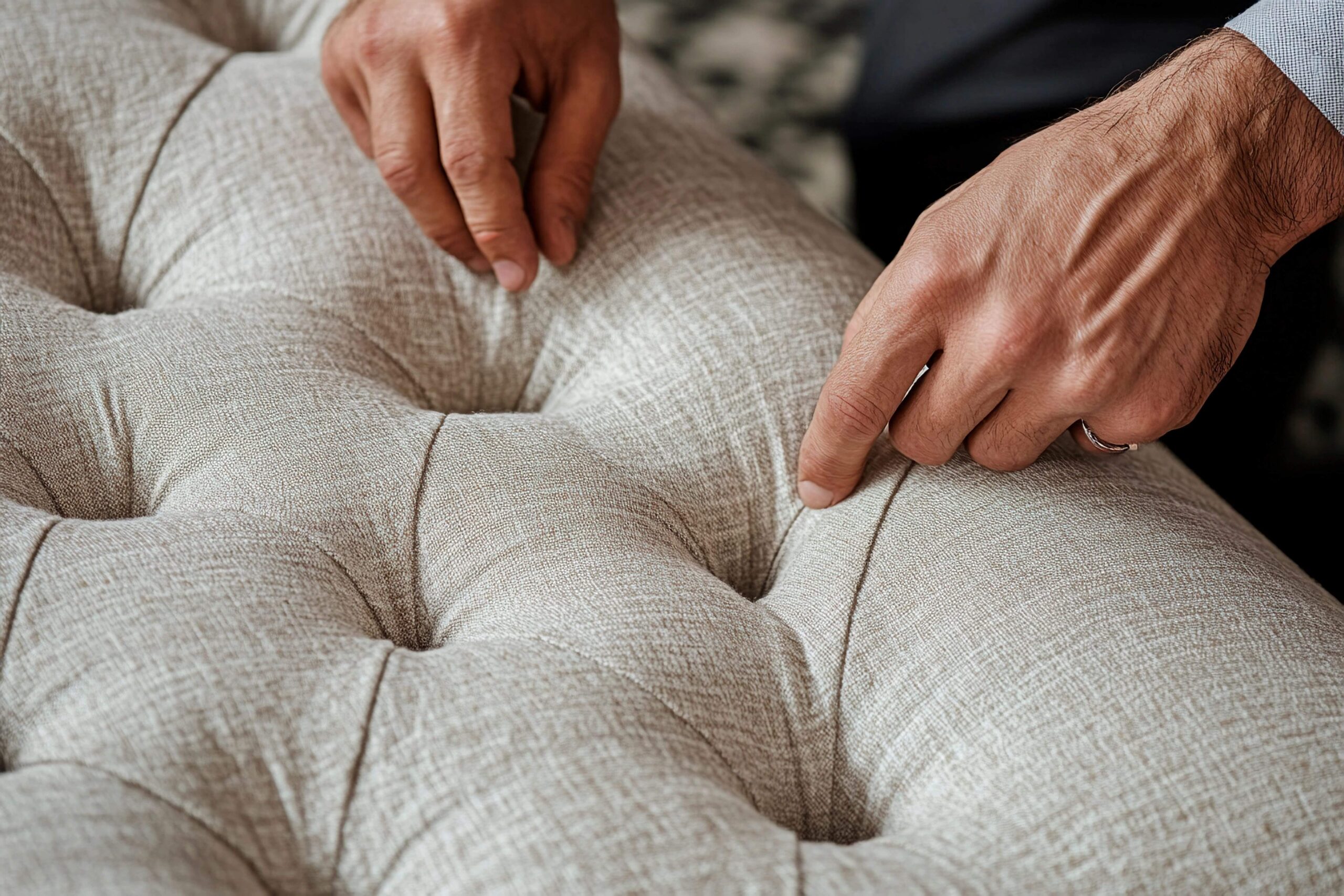
Hardwood frames, particularly on older, heavier sofas, are usually strong candidates because the frame itself, the most expensive part to replace, is often still sound underneath tired fabric. Rock the sofa gently side to side. Creaking, visible flex, or joints that feel loose suggest structural repair will be needed, which is still usually possible, but it changes the scope of the job.
Sit On It

A seat that has gone noticeably soft or uneven usually means the springs or webbing have sagged, not just the foam. This is a normal, fixable part of reupholstery rather than a dealbreaker, but it is useful to know before the sofa goes into the workshop.
Weigh the Build Quality and Sentiment
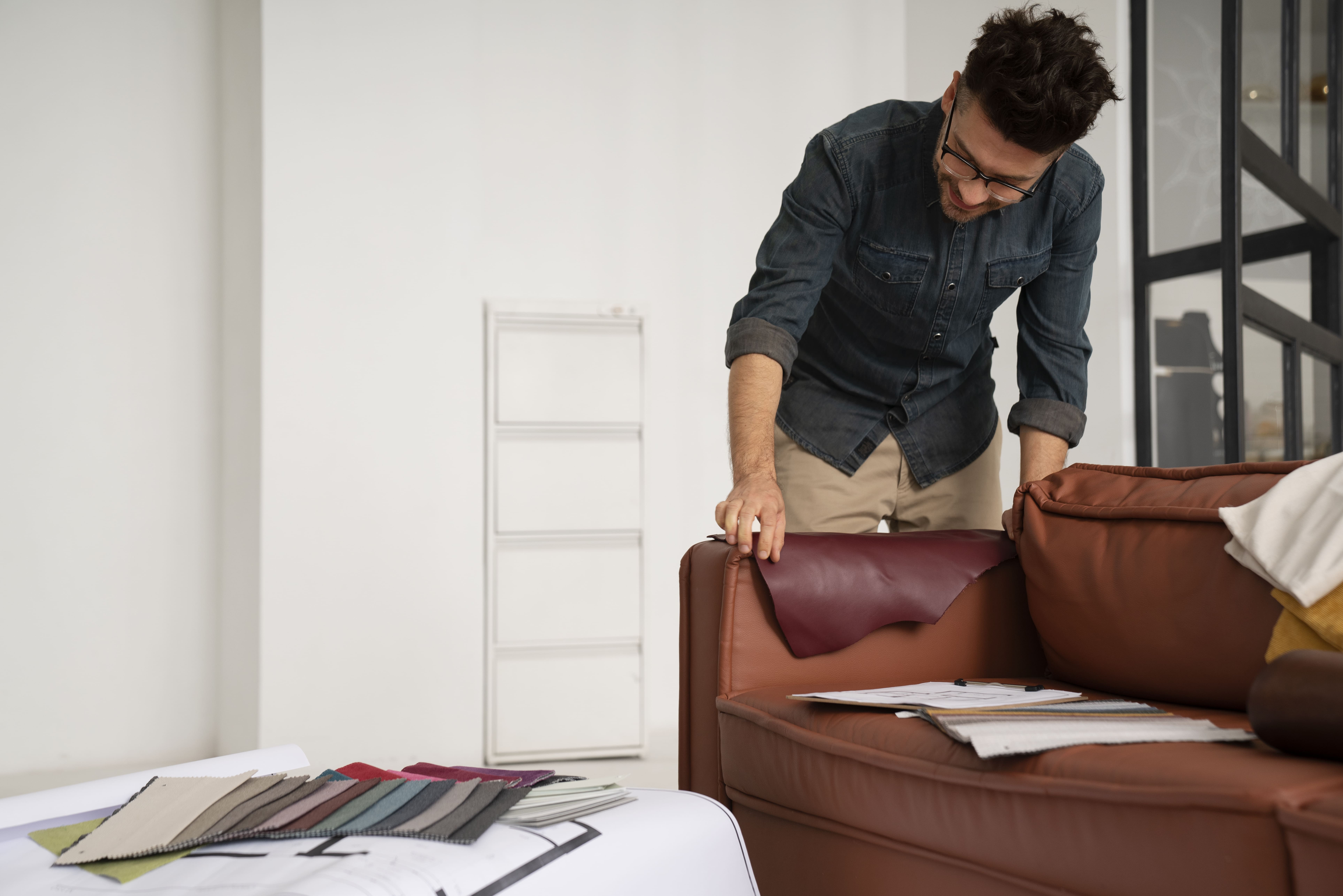
Many people reupholster specifically because the underlying frame was built to a standard that is hard to find in current mass-market furniture, or because the piece carries genuine sentimental value. In both cases, reupholstery preserves what made the original worth keeping while replacing everything that has worn out.
Know When It Stops Making Sense

If the frame is cracked, warped, or made from a material that cannot realistically be repaired, some lower-cost engineered frames fall into this category, reupholstery is rarely the right call compared to replacement. A proper initial assessment should catch this before you commit.
The Sofa Reupholstery Process, Step by Step
1. Initial Assessment and Consultation
Before any fabric changes hands, the sofa is examined in full: frame condition, spring type, foam condition, and structural issues such as loose joints or cracked rails. This is also where fabric options and colour direction are discussed, since the condition of what is underneath the old fabric directly affects the scope of work. A proper assessment here prevents surprises later, such as discovering a broken frame member only after the old fabric has been stripped.
2. Stripping the Old Upholstery
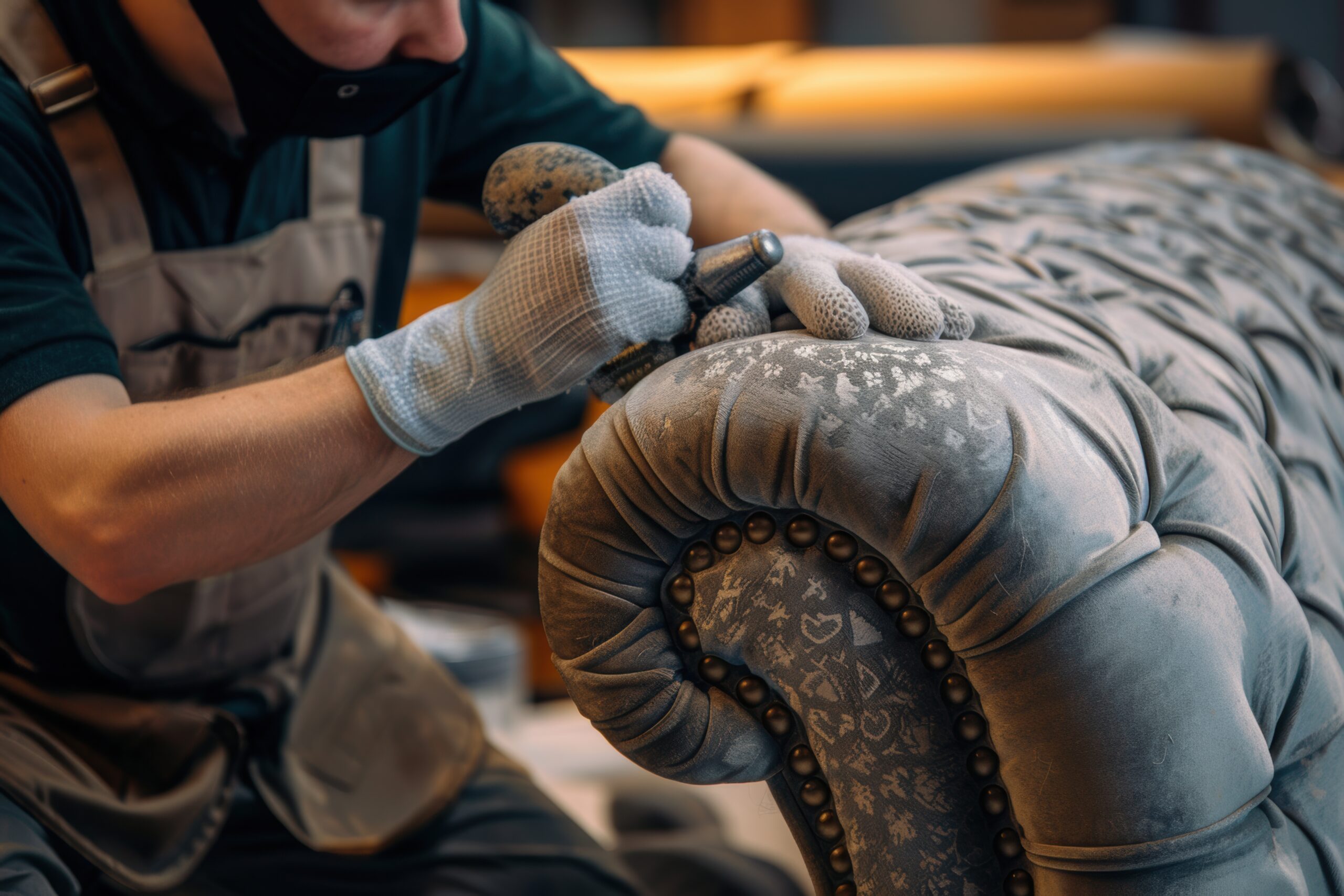
The existing fabric is removed carefully, piece by piece, rather than torn off. Each panel, arm piece, back panel and cushion cover is set aside and often used later as a cutting template for the new fabric, since the old panels already carry the sofa’s exact shape and seam lines. This is slower than it looks, and rushing it is one of the more common causes of a poor final fit.
3. Frame Inspection and Repair
With the old cover off, the frame is fully visible for the first time. Joints are checked for looseness, corner blocks are inspected, and any cracked or weakened timber is repaired or reinforced before work continues. This step is easy to skip visually once new fabric is on, which is exactly why it needs to happen properly here rather than being patched over.
4. Webbing and Spring Work
This is the structural heart of the process and the part most people never see. Older or higher-quality sofas typically use hand-tied coil springs set over jute webbing, tied in place with strong twine in a pattern that gives the seat its bounce and support. Newer or more compact sofas more often use sinuous (zigzag) wire springs, which are faster to install but give a different seating feel. Worn or sagging webbing is stripped and replaced, and springs that have lost tension are either retied or replaced, depending on their condition. This stage determines how the finished sofa will actually feel to sit on, far more than the fabric does.
5. Padding and Cushion Rebuild
A layer of hessian or similar support fabric is fitted over the reworked webbing and springs to create a smooth base. Foam is then cut to size for the seat and back cushions, typically wrapped in a layer of soft batting (often called dacron wrap) to round out the edges and prevent the foam’s outline from showing through the finished fabric. Foam density matters here: a higher-density foam holds its shape longer under daily use, which is particularly relevant for a household that uses the sofa heavily.
6. Fabric Cutting and Pattern Matching
Once the new fabric is chosen, it is cut using the original panels as a template, accounting for the fabric’s grain direction and any pattern that needs to line up across seams, such as where two cushion panels meet or where an armrest panel meets the sofa body. This is a precision step. A pattern cut without attention to grain direction or repeat spacing can leave a finished sofa with visibly mismatched seams even when the workmanship elsewhere is excellent.
7. Sewing and Fitting the New Cover
Panels are sewn together according to the original construction, then fitted onto the frame section by section, starting from the main body and working outward to the arms and back. Fabric is pulled to an even, consistent tension as it is fitted, since overpulling in one area and underpulling in another is what causes visible wrinkles or a lopsided appearance on an otherwise well-built sofa.
8. Finishing Details
This is where the details that separate a professional result from a rushed one get added: piping or welting along seams for a crisp edge, tufting if the design calls for it, zip closures fitted to cushion covers for future maintenance access, and a dust cover fitted to the underside of the frame to conceal the webbing and raw edges from below. Legs are reattached, and the whole piece is checked from every angle for uneven seams, visible staples, or loose threads.
9. Quality Inspection and Delivery
A finished piece is checked for seam alignment, cushion fit, overall tension and general finish before it leaves the workshop. For a service handling sofa upholstery Singapore projects at scale, this final check is what keeps quality consistent from one project to the next rather than depending on which craftsman happened to work on a particular piece.
How Much Fabric a Sofa Reupholstery Needs
Fabric quantity is one of the most useful things to understand before starting, because it affects both planning and the risk of running short mid-project. As a working guide:
| Piece | Typical Fabric Needed |
| Armchair | 5 to 8 yards |
| Loveseat / two-seater | 8 to 12 yards |
| Standard three-seater sofa | 12 to 18 yards |
| L-shape or sectional sofa | 25 to 45 yards |
Two things push these figures higher. Large patterns need extra yardage because the pattern has to be matched across every seam, which means cutting around the repeat and accepting more offcut waste. Complex shapes, such as tufted backs, rolled arms, or loose scatter cushions, also consume more fabric than a simple straight-panel design. This is exactly why a professional measures every panel, cushion side, dust cover and welt section individually rather than working from a single overall figure, and why buying a little extra is standard practice: running short partway through risks a visible mismatch between dye lots from different fabric batches.
Reupholster or Buy New? How to Decide
This is the decision most people are really trying to make, and it comes down to a few clear questions rather than a single rule.
Is the Frame Worth Saving?
This is the deciding factor. A solid hardwood frame is the expensive, hard-to-replace part of any sofa, and if it is still sound, reupholstery lets you keep it while replacing everything that has worn out. If the frame is cracked, warped, or cheaply built, that advantage disappears and replacement usually makes more sense.
How Long Do You Want It to Last?
Reupholstery is an investment in longevity. A well-rebuilt sofa on a sound frame can keep going for many more years, whereas lower-cost replacement furniture is often built to a standard that shows wear within a few years. If you value durability over the lowest upfront outlay, a solid existing frame tilts the decision toward reupholstery.
Does the Piece Fit Your Space and Taste?
A sofa that already fits your room dimensions perfectly and suits your layout is genuinely hard to replace like-for-like. Reupholstery keeps that exact fit while letting you change the fabric, colour and feel entirely, effectively a redesign of a piece you already know works in the space.
Does It Carry Sentimental or Design Value?
Heirloom pieces, vintage frames, and sofas with a construction quality that is hard to find new are all strong reupholstery candidates for reasons that have nothing to do with a spec sheet.
When Replacement Wins
if the frame is failing, the sofa never fit the space well, or you actively want a different size or shape rather than a refresh of the current one, buying new is the more sensible route. Reupholstery is about preserving and renewing a good piece, not forcing a poor one to keep going.
Choosing the Right Fabric for Reupholstery
Fabric choice affects two separate things: how the finished sofa looks and feels, and how the reupholstery process itself runs. This section covers the decision-level considerations. For a swatch-by-swatch breakdown of specific fabric types and their individual pros and cons, the full guide sits on the sofa upholstery service page.
Match the fabric to how the sofa is actually used. A family sofa with children or pets has very different demands from a formal living room piece used occasionally. High-traffic households benefit most from durable, stain-resistant performance fabrics, which are designed to withstand daily wear and clean easily. More decorative fabrics such as velvet or fine linen suit lower-traffic, more formal settings where appearance matters more than everyday resilience.
Factor in Singapore’s climate. Humidity and heavy air-conditioning use both affect how fabric performs over time. Breathable, mould-resistant and easy-clean materials tend to hold up better in local conditions than fabrics prone to trapping moisture.
Understand how fabric affects the process. Beyond appearance, fabric choice changes the mechanical job. Large patterns need extra yardage and careful matching across seams. Leather behaves differently from woven fabric under tension and does not forgive re-stapling, since staple holes are effectively permanent in leather. Delicate or slippery fabrics are harder to fit to an even tension. None of these are reasons to avoid a fabric you love, but they do affect turnaround time and are worth discussing at the consultation stage.
DIY Reupholstery vs Professional Reupholstery
Reupholstery is a genuinely learnable skill, and simple, flat-panel pieces such as a dining chair seat pad are a realistic starting point for a confident DIYer with the right tools: a heavy-duty staple gun, a staple remover, sharp fabric scissors, a curved upholstery needle and upholstery-grade thread, and a webbing stretcher if the piece needs new webbing.
A full sofa is a different scale of project. Several parts of the process are genuinely professional-level work even for people otherwise comfortable with DIY furniture projects:
Tufting and deep buttoning require precise measurement and tensioning across the whole surface simultaneously, and a small error compounds visibly across the finished piece.
Curved sections, such as rolled arms or curved backs, need pattern-cutting skill to avoid visible puckering, which is much harder to get right without experience.
Leather behaves differently from fabric under tension and does not forgive re-stapling in the same way woven fabric does, since staple holes and stretch marks in leather are effectively permanent.
Structural frame repair, particularly reglued or reinforced joints, benefits from proper clamping equipment and woodworking experience most households do not have on hand.
If your sofa needs any of the above, or if it is a piece you genuinely do not want to risk getting wrong, this is where handing the work to an established sofa upholstery workshop earns its keep, both in the quality of the finished piece and the time saved.
What Can Go Wrong in Sofa Reupholstery
A handful of mistakes account for most poor results, whether from a DIY attempt or a rushed professional job.
Skipping the Frame Inspection
Fabric and foam are only ever as good as what they are built over. A sofa that looks perfect on delivery day but starts creaking or sagging within a year usually had a structural issue that was covered up rather than fixed.
Poor Pattern Matching
Rushing the fabric-cutting stage is one of the most visible failure points, since mismatched seams and grain direction are immediately obvious once the sofa is back in a room under normal light.
Uneven Fabric Tension
A cover pulled too tight in one section and too loose in another creates a lopsided, wrinkled appearance no amount of finishing detail can fully disguise.
Underestimating Fabric Quantity
Complex pieces with loose cushions, an artistic back design, or a large pattern repeat can require significantly more fabric than a simple straight-panel sofa. Underbuying partway through a project is a common cause of both delay and mismatched dye lots between batches.
Getting Your Sofa Assessed
The only reliable way to know whether your specific sofa is a good candidate for reupholstery, and what the process will actually involve for that piece, is a proper in-person or photo-based assessment. WTP Style offers this as the first step of its sofa upholstery service, with an in-house Singapore workshop handling every stage of the process described in this guide, from frame inspection through to final finishing.
Frequently Asked Questions
How long does sofa reupholstery take from start to finish?
Most standard three-seater sofas take one to three weeks in a professional workshop, depending on fabric lead time and how much structural repair the frame and spring system need. Simpler pieces such as a single armchair are usually faster.
Can any sofa be reupholstered?
Most sofas can be reupholstered, depending on their condition and construction. If additional work such as structural repairs, repadding or new cushions is required, these can be arranged as separate services.
Is it better to reupholster or buy a new sofa?
It depends mainly on the frame. If the frame is solid, well-built, or hard to replace like-for-like, reupholstery keeps a proven piece and lets you redesign its look entirely. If the frame is failing or the sofa never fit your space well, replacement usually makes more sense.
How much fabric do I need to reupholster a sofa?
As a general guide, an armchair may require around 6 to 9 metres of fabric, a two-seater sofa around 9 to 13 metres, a standard three-seater around 14 to 18 metres, and an L-shape or sectional sofa around 25 to 45 metres. The exact amount depends on the sofa’s size, shape and design, as well as the fabric pattern. Larger patterns or fabrics that require pattern matching may require additional material. A professional can provide a more accurate estimate based on the specific piece.
Do I need to move out of my home while my sofa is being reupholstered?
No. The sofa itself is typically taken to the workshop, so the reupholstery work does not require you to move out of your home. In some cases, the piece may first be assessed on-site before being transported to the workshop.
Is reupholstery more sustainable than buying new?
Generally yes. Reupholstering keeps a sound frame in use rather than sending bulky, hard-to-recycle furniture to landfill and manufacturing a replacement, which carries its own fresh material and carbon footprint.
Can I choose a completely different fabric colour or type from my current sofa?
Yes. Reupholstery rebuilds the cover from scratch, so the new fabric is entirely your choice regardless of what the sofa currently looks like. This is one of the main reasons people choose reupholstery over a simple repair, it is effectively a chance to redesign the piece while keeping a frame that has already proven itself.